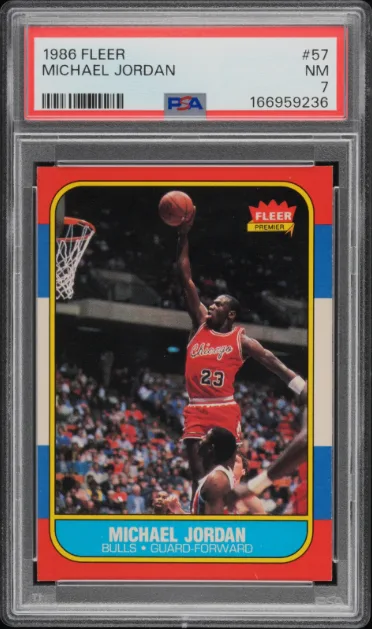
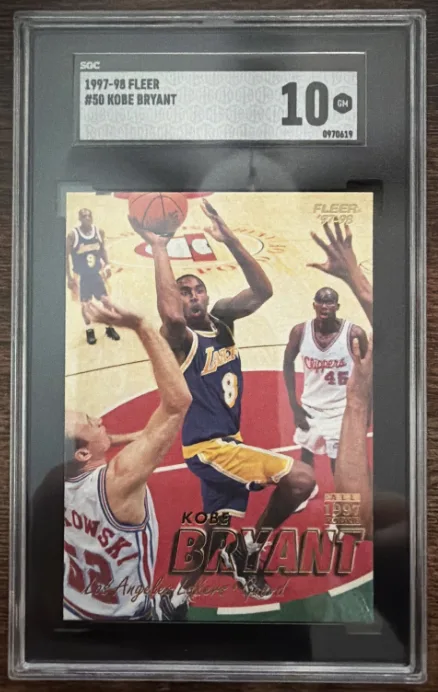
The short answerPSA scores 17 points higher, mostly on market acceptance.
What decides it for you: Does getting the card back sooner matter more to you than how widely the slab resells?
Five questions, answered
1 · Resale valueWhich slab adds more to the resale price?
PSA leadsPSA is rated Premium at resale; SGC is Accepted.
Resale standing is how the US resale market treats the slab: whether buyers pay extra for the label, pay normally, or treat the card as raw. It is recognition, not a promise that a particular card will sell for more. The sold-price figure is a measured sample of Pokémon cards only.
How resale standing is decidedOn the scorecards: PSASGC
FactPSASGC
Resale standingPremiumAccepted
eBay Authenticity GuaranteeCoveredCovered
Major US auction housesStandard inventoryStandard inventory
Sold price against a PSA 10 (Pokémon)The referenceNot verified
2 · Long-term holdWhich is the better long-term hold?
No clear leadNeither is ahead on the things that keep a slab checkable over years, on the evidence we hold.
A slab holds its value over years when a future buyer can still check it: a public cert lookup and a population report let anyone verify a card long after it was graded. Years in business is shown for context; it is not a guarantee the company, or its lookup, will last.
How trust and verifiability is scoredOn the scorecards: PSASGC
FactPSASGC
Rated for long-term investmentYesYes
Public cert lookupPublicPublic
Public population reportYesYes
Years operating3528
3 · ProtectionWhich protects the card better?
No clear leadSGC's holder is not verified, so we cannot say which protects better.
We record whether a holder is sealed and tamper-evident, and whether it is a standard size that fits ordinary storage. We have not tested impact, UV or archival protection, so we do not rank holders beyond that.
How the holder is scoredOn the scorecards: PSASGC
FactPSASGC
Sealed holderSealed, tamper-evidentNot verified
Holder sizeStandard sizeNot verified
Rated for protectionNoNo
4 · Grading difficultyWhich grades harder?
Not like for likePSA gave its gem grade to the same share of modern sports cards (40.8%) and more of its modern TCG cards (68.2% against 33.5%).
A gem rate is the share of cards a grader returns at its gem grade or better. It is not a same-card test: each grader sees whatever collectors chose to send it, and the gem grade is not the same at every company.
How gem rates are read FactPSASGC
Gem rate, modern sports (2020s sets)40.8%40.8%
Gem rate, modern TCG (2020s sets)68.2%33.5%
Counts as a gemPSA 10SGC 10 and Pristine
Cards countedCards added in May 2026Cards added in May 2026
SourceGemRate, May 2026 grading recapGemRate, May 2026 grading recap
5 · Grading technologyWhich has the better grading technology?
Method not publishedSGC does not publish how its grades are set.
We describe how each grader says its grades are set and do not rank the methods: nothing we can measure shows that one method grades more accurately than another.
FactPSASGC
How grades are setHuman, machine-assistedNot stated
What the grader saysAt least two graders must agree on a grade; PSA has been bringing in Genamint imaging, which measures each card and flags alterations, since buying it in 2021.SGC's site does not describe how cards are graded.
What it costs to startThe cheapest listed slab
The cheapest tier each grader lists today, which is not the same service at both. PSA's covers cards declared up to $500 and SGC's covers cards declared up to $1,500.
PSA$39.99per cardValue, cards up to $50090–100 business daysTypical turnaround: 90–100 days
SGC$50per cardStandard, cards up to $1,50040+ business daysTypical turnaround: 40+ days
Go deeper: the full scorecards
How we scoreAll scorecards