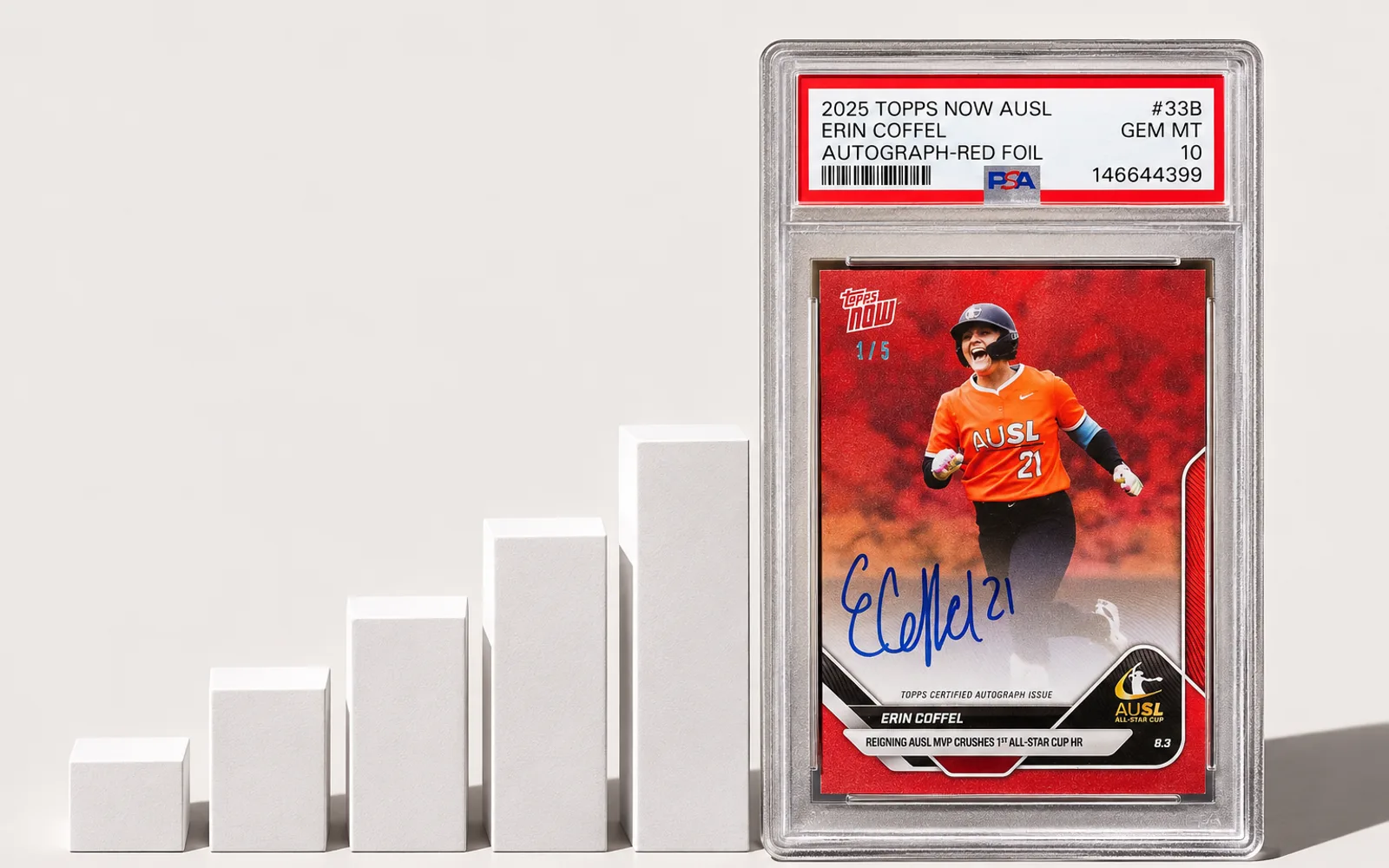
A grade is one company's opinion of your card. Every grader we checked says a second person or a second step looks at that opinion before it goes on the label. What you can do afterward, if you think they got it wrong, depends on whether you sent the card in or bought it already graded.
This guide covers PSA, CGC and TAG in full, from their own pages as we read them on Nov. 14, 2026. SGC and Beckett publish much less about how a grade is reached; what they do say is in its own section below.
The short version
- PSA and CGC use people; TAG uses a machine checked by people. PSA says at least two graders examine every card and must agree. CGC says several graders each enter a grade and reach a consensus. TAG's software scores the card, and a verification team confirms the data.
- Disagreeing with your own grade costs a new fee. PSA's Review service charges the full grading fee. At TAG, a resubmission pays the grading fee again, and CGC regrades go through its normal grading tiers.
- Only PSA promises you can't lose the grade you have. PSA's Review keeps your original label if the card doesn't go up. CGC says a regrade is not guaranteed to come back the same. TAG says a resubmitted card that grades lower goes into a slab at the lower grade.
- Think a slab you bought is overgraded? That's the guarantee, not a regrade. PSA, CGC and TAG will pay out or buy the card if they agree they were wrong. PSA and TAG exclude the person who first sent the card in; CGC limits that person to the grading fee.
Who looks at your card
PSA. Its FAQ says every card entering the grading room "is examined by at least two authentication and grading professionals." The first grader makes an initial assessment. The card is then reviewed again inside the grading stage; PSA says this step used to be called QA1. A later check, QA Checks, looks at the holder. Elsewhere in the same FAQ, PSA says its graders "must agree upon a grade."
CGC. Staff separate each card from its paperwork before grading, so the graders don't know who sent it. Then "multiple CGC Cards professionals" examine the card. Each one enters a grade into CGC's system, and the group reaches a consensus. Trading card game and non-sports experts grade those cards; sports card experts grade sports. CGC says artificial intelligence helps identify the card and measure centering. A quality control specialist then checks the card, label and holder. CGC's guarantee says every card has been inspected by at least two professionals.
TAG. The grade comes from software first. TAG images the card and its machine-learning system scores the defects it finds, producing an overall grade. A verification team then analyzes and confirms that data, and checks authenticity. TAG says the review is there to catch false positives and data errors. A quality assurance team inspects the finished slab. For more on how machine grading works, see our guide to AI grading.
How each grader explains a grade
You can't argue with a grade you can't see the reasons for.
- PSA includes Grader Notes, which list the flaws behind the grade, at no extra cost on trading card orders at the Express level and above. That covers grading, crossover and Review orders.
- CGC pages we read do not describe a written explanation of the grade. They do show images of every graded card online.
- TAG gives every card a digital report. Its DINGS section lists the main defects behind the grade. TAG says the centering numbers in that summary are often rounded, and points you to the report's map for exact figures.
What to do: read the explanation before you pay to argue. A centering reading or a single bad corner often settles it.
If you sent the card in and disagree
PSA lets you resubmit the card for Review. You pay the full grading fee and shipping. The card must still be in its PSA holder. PSA's Review page says there is "no risk of losing your original labeling and grade" if the card doesn't upgrade, and the cert number stays the same. One exception sits in PSA's terms: a holder that is open, unsealed or shows signs of tampering can be graded fresh and "may" get a lower grade. If you crack the card out yourself, PSA treats it as never graded and owes you nothing on the old grade.
CGC lists no separate review service on its fees page. Its ReHolder service puts a card in a new CGC holder for $10, and the grade does not change. A card you send for regrading with its original label is, in CGC's words, "NOT GUARANTEED TO RECEIVE THE SAME GRADE." CGC can also move any submission into its Appearance Review, the guarantee process below.
TAG says that "generally" it will not accept a card for a grade dispute, while admitting no grading system is perfect. Email support with your account email, order number, cert number and what you think is wrong. One case it does flag: a card graded MINT 9 or lower with no defect listed on its report may be a data issue that needs correcting. You can also resubmit the card, which TAG accepts at its discretion, for the full fee. Its terms spell out what happens:
- Lower grade: the card goes into a slab at the lower grade.
- Higher by 8 points or fewer: the card goes into a slab at the higher grade.
- Higher by more than 8 points: TAG may slab it at the higher grade or return it in a TAG shield, unslabbed.
- Signs of alteration: returned in a TAG shield.
If you bought a slab you think is overgraded
This runs through each grader's guarantee. It is a claim that the company made a mistake, and the payout has a ceiling.
| How to start | If they agree | If they don't | Who can't claim | Cap | |
|---|---|---|---|---|---|
| PSA | Contact support for a Grade Guarantee Review | Buys the card at market value, or regrades it lower and pays the difference | Card back at the original grade; $25 fee plus return shipping | The original submitter | $250,000 per card, $500,000 lifetime |
| CGC | Send it in for Appearance Review, with proof of purchase; the review is free, but service and shipping fees may apply | Relabels it at the lower grade and pays a difference in value, buys the card, or swaps in an equal card at the original grade | Not stated on the guarantee page | The original submitter gets no more than the grading fee | $250,000 per card |
| TAG | Email [email protected] | Buys the card at market value, or regrades it lower and pays the difference | Card back at the original grade; $100 fee plus return shipping | The original submitter | $10,000 per card, $25,000 lifetime |
The grader sets the market value in every case. PSA bases it partly on its own price guide and recent sales, and wants proof of purchase. CGC pays the smallest of three figures: based on the value you declare, the card's market value, or what you paid. It also asks you to try to reverse the sale with the seller first, and to prove you tried. CGC says it will never return a card it found overgraded in a holder with the wrong label. If you refuse its remedy, CGC takes the card out of the holder and refunds the original grading fee. TAG will consider a higher cap only if you ask in writing, and it agrees in writing, before the card is graded.
What the guarantee won't cover
PSA, CGC and TAG all exclude a card that has left its holder or sits in one that looks tampered with. PSA and TAG also exclude damage after grading, such as fading or mold, and manufacturing defects. PSA's terms say grades are "individual judgments that are subjective" and that it has no liability for a grade it assigns. TAG's loss-and-damage coverage excludes "disagreement with an assigned grade." For a grade you think is wrong, the guarantee is what each company offers instead.
What to do
- Read the grade explanation first: PSA's Grader Notes, TAG's DINGS report, or CGC's images.
- Compare the card against the grader's own published standards for that grade.
- Keep the card sealed in its original holder. Cracking it out ends the guarantee at PSA, CGC and TAG and rules out PSA's Review.
- Sent it in yourself? At PSA, use Review. At CGC or TAG, a regrade can come back lower, so decide whether you can live with that before you pay.
- Bought it graded? Use the guarantee. Keep the receipt and the seller's details, and check the cap against what you paid. At CGC, try to undo the sale first.
- Check each grader's terms on the day you submit. The dates we read are listed under Sources.
SGC and Beckett
Neither SGC nor Beckett describes on its site how many people look at a card or how they agree on a grade. Here is what their own pages do say.
SGC. Its terms call grading "individual judgment and professional opinion, which is subjective in nature," and say SGC has no liability for any grade it assigns. If new information turns up after grading, SGC has no obligation to change the grade unless the card is sent in again. A review of an SGC slab is priced like a raw grade: $50 a card at Standard for a card declared at up to $1,500, with a 40+ business-day wait. SGC can also deactivate the cert on a slab it later believes holds an altered or counterfeit card, even after the card has gone back to you.
Beckett. Its label shows four subgrades, for centering, corners, edges and surface, next to the overall grade, which tells you where the points went. Beckett says every card is checked for trimming and other alteration before grading starts. If you disagree with a Beckett grade, Graded Card Review looks at the card in its holder, and the fee is charged "regardless of outcome." Beckett's terms say a regraded card "may go up, may go down or may stay the same," and that any card taken out of a Beckett holder, for any reason, is graded again.
We found no buyer guarantee for overgraded slabs on either company's site. If you bought a slab you think is overgraded, ask the grader in writing before you send it anywhere.
Sources
- PSA Frequently Asked Questionspsacard.com/support/faq
- PSA Trading Card Reviewpsacard.com/services/tradingcardgrading/review
- PSA Submission Services Terms and Conditions, last updated April 22, 2026psacard.com/termsandconditions
- Terms and Conditions of the PSA Authenticity and Grade Guaranteepsacard.com/financialguarantee
- The CGC Cards Grading Processcgccards.com/card-grading/grading-process
- CGC Cards Grades FAQscgccards.com/about/help-center-faqs/cgc-cards-grading/about-cgc-grades
- The CGC Guaranteecgccards.com/card-grading/cgc-guarantee
- CGC Cards Services and Feescgccards.com/submit/services-fees/cgc-grading
- CGC Cards Services Terms and Conditions, revised April 14, 2026cgccards.com/legal/terms-and-conditions
- TAG Help Center: What Are The Steps of TAG's Grading Process? (March 31, 2026)help.taggrading.com/en/articles/10091666-what-are-the-steps-of-tag-s-grading-process
- TAG Help Center: Can I Dispute a Grade? (March 31, 2026)help.taggrading.com/en/articles/10660206-can-i-dispute-a-grade
- TAG Terms of Service and Authenticity Guarantee, last revised Sept. 29, 2026taggrading.com/pages/terms
- SGC Grading Terms & Conditions, last updated Oct. 30, 2025gosgc.com/terms
- SGC Standard Services and Pricing (read Nov. 14, 2026)gosgc.com/card-grading/services-pricing
- Beckett Terms of Service, effective Aug. 7, 2025, sections E to Gbeckett.com/tos
- Beckett Card Grading: subgrades, scale and FAQ (read Nov. 14, 2026)beckett.com/grading