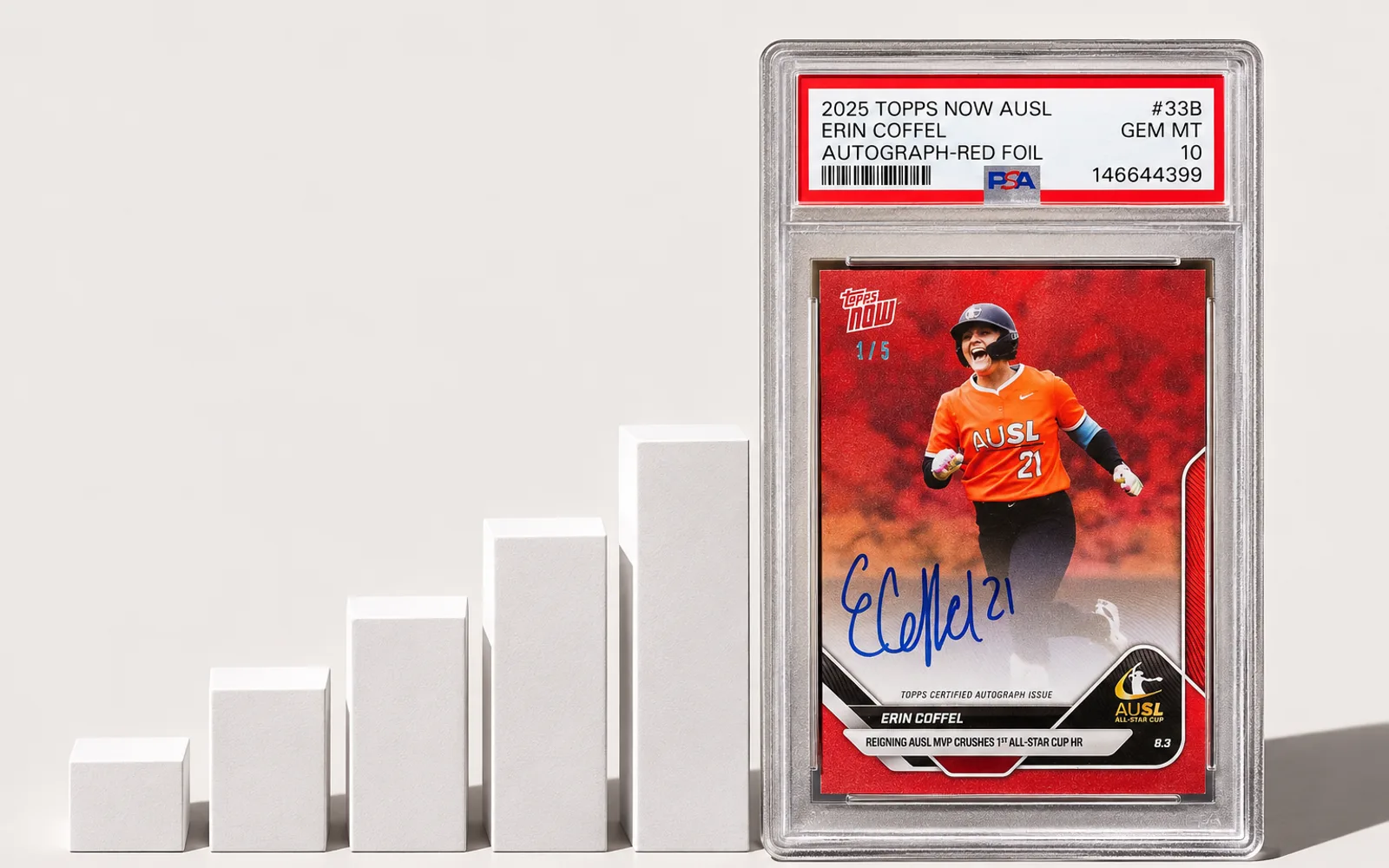
A slab is only as good as the case and label around the card. Both can be faked, and on Nov. 10 we reported AliExpress listings selling custom PSA-style labels for $4.05, some printed with real, active cert numbers. Look one of those numbers up and you get a real card and a real grade. It may not be the card in front of you.
This guide covers how fake slabs are made and sold, what reholdering is, and the checks a buyer can run before paying. It builds on How to Tell a Real Slab From a Fake, which explains what makes a slab a slab in the first place. The graders' own advice comes from PSA, CGC, TAG, SGC and Beckett pages we read on Nov. 14, 2026.
The short version
- A matching cert number is the start, not the proof. Counterfeiters copy real numbers from public records. Check that the card in the case is the card in the grader's photos.
- Look at the case, not just the label. PSA says a holder that has been opened shows cloudy "frosting" along the edges, small cracks, or plastic that flexes when it should be rigid.
- Reholdering is legitimate only when the grader does it. PSA, CGC and TAG each replace their own holders. Anyone else opening a slab and sealing it again is tampering.
- Run the stolen-slab registries too. A real slab can still be stolen. Our three free checks cost nothing.
- If the card is expensive, make the sale depend on the grader. PSA invites buyers to have a slab reviewed before purchase and says a confident seller should agree.
How fake slabs are made
There are four common routes, and they need different checks.
A fake label in a fake case. The AliExpress listings sold front and back labels with barcodes, QR codes and a reflective patch. Other stores sold empty cases to go with them. The listings call these custom labels, not graded cards, but nothing stops a buyer from putting a card inside and listing it as graded.
A fake label with a real cert number. This is the version a cert lookup misses. Buyer photos in our AliExpress report showed copied labels using live PSA numbers, including one for a GEM MT 10 card. PSA itself warns that a cert lookup does not rule out a counterfeit for this reason.
A real label moved to another case. The same report found a Japanese listing selling genuine PSA, BGS and ARS labels already removed from their cases. A real label can end up sealed around a different card.
A fake front on a real label. PSA's buyer's guide describes forgers gluing a new printed front over a genuine PSA label. Some forgers copy an older PSA label design instead, to avoid the hologram built into the current one.
A related problem is the lookalike: a holder from a different grader whose label resembles a better-known one at thumbnail size. That isn't counterfeiting, but it can cost you the same money. We looked at one case in Golden's slab looks like Beckett's.
What reholdering is
Reholdering means taking a graded card out of its holder and sealing it in a new one. Done by the grader, it is a routine service. Done by anyone else, it breaks the chain that makes the slab worth checking.
Legitimate: the grader replaces its own holder
-
PSA removes the card from its PSA holder and seals it in the current holder and label. The grade, the authentication result and the cert number generally stay the same. PSA inspects every reholder order first, to confirm the holder and label are genuine and the grade is not an obvious error. If a card fails, PSA may return it raw or grade it again. The basic Reholder service is $12.99 a card.
-
CGC moves a card from one CGC Cards holder to a new one, and the grade does not change. The card must still be sealed in its original CGC Cards holder to qualify.
-
TAG reslabs a holder that arrives cracked, damaged or with debris inside for free, if you tell TAG within 10 business days of delivery. A holder you damage yourself costs $15 a card plus shipping.
-
SGC reholders its own holders that are unopened but scratched, chipped, cracked or otherwise damaged, from $50 a card at Standard. If the holder has been opened, the card must be graded again and the full grading fee is due.
-
Beckett recases a damaged holder from $9.95 a card, and its graders check the label grades against the card. Its terms say any card removed from a Beckett holder, for any reason, is graded again to current standards.
The pattern across all five: the card has to come back to the grader still sealed. A card that has already been cracked out is a raw card again. A card that has already been cracked out is a raw card again.
Not legitimate: anyone else opening the case
A slab's value rests on one fact. Nobody has touched the card since the grader sealed it. Opening a holder and closing it again, by anyone but the grader, ends that, whatever the intent.
PSA describes what it looks like. Some people glue a broken holder back together. The weld stays broken, so the plastic flexes again, and pressure from a fingernail along the edge can make it crack and pop open.
PSA's own guarantee draws the same line. It does not cover a card that has been removed from its PSA holder, on purpose or by accident, or any card whose holder or label shows evidence of tampering or fraud. A resealed slab loses the grader's backing even if the card inside is the original.
Checks by grader
What each grader tells buyers to check, from its own pages. Every cert lookup we know of is listed on our cert lookup page.
| Cert lookup shows | Security features the grader names | Phone check | Grader's own reholder | |
|---|---|---|---|---|
| PSA | Front and back images of the graded card | LightHouse logo with an on/off light effect; fugitive-ink pattern against label washing; UV logo pattern on the back; QR code to cert verification; sonically welded, tamper-evident case | Scan the QR code on the back of the label | Reholder, from $12.99 a card |
| CGC | The card and its images | Microprinting, UV ink, holographic foil, a unique cert number and barcode; ultrasonically welded case | Scan the QR code on the back of the label | ReHolder, for cards still in their original CGC holder |
| TAG | The DIG report, with images and a grading breakdown | Proof Mark on the back of the slab, behind the QR code | Free Proof Authentication app checks the Proof Mark; the QR code opens the DIG report | Reslab: free for shipping damage reported within 10 business days, otherwise $15 a card |
| SGC | A lookup by cert code: 7 digits on black labels, 11 characters on green and white labels | None named on its site | None named | Reholder from $50 a card, for SGC holders that are unopened but damaged. An opened holder means a full regrade |
| Beckett | A lookup by serial number. It was working again by Oct. 17, after Beckett's outage | On the new label: holographic metallic material, a hidden UV pattern and a light-reactive anti-counterfeit badge | Scan the QR code on every new label | Recase from $9.95 for a damaged holder. Beckett regrades every card it takes out of a holder |
SGC's terms let it deactivate the cert on any slab it later believes holds an altered or counterfeit card, even after the card has left SGC. A cert that looked up fine last year can stop working, so check it on the day you buy.
TAG's Proof check is the only one here that tests the case itself rather than the record behind it. TAG says every Proof Mark is scanned before a slab leaves its facility. A QR code alone proves less: anyone can print one that points to a real cert page.
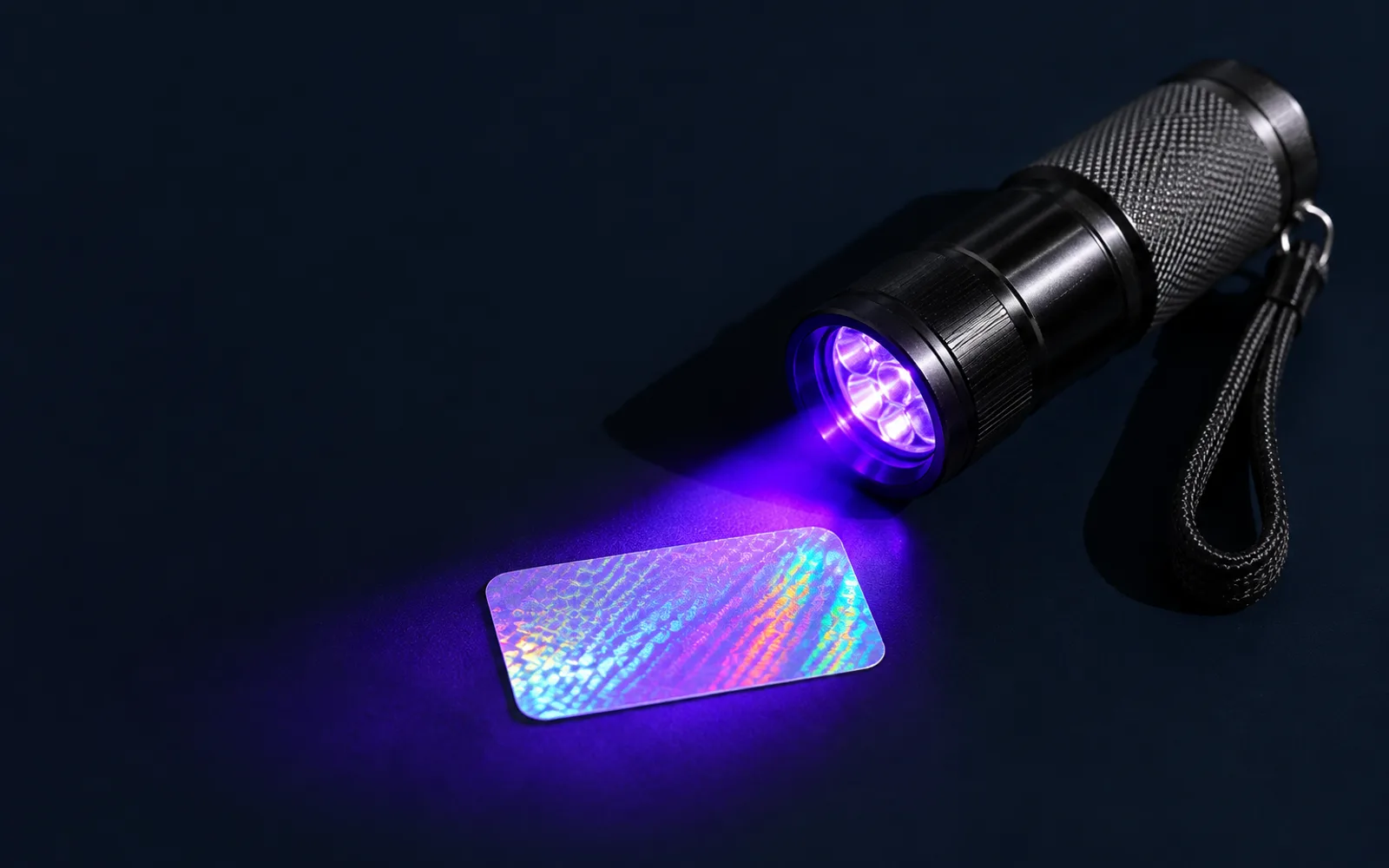
PSA, CGC and Beckett all say their labels carry UV features. None publishes what a genuine label should look like under ultraviolet light, so a blacklight check works best side by side with a slab you know is real. For what UV, infrared and spectral imaging can show, see the forensic section of our AI grading guide.
Two tests from PSA you can run at home
The light test. Hold a PSA slab close to a strong light. On a genuine label you should be able to see the text on the other side through the paper, even if you can't read it word for word. A fake front glued over a real label makes it too thick to see through, and sometimes you can see the edges of the real label underneath.
The edge test. Look along all four edges. Cloudy "frosting" or fine cracks in the clear plastic show the sonic weld has been broken. A sealed PSA holder is firm and almost inflexible. Once the weld is broken, the plastic flexes again.
The frosting test is for PSA. TAG warns that its clearer plastic makes the normal sonic weld points visible, and they can look like cracks inside the edges when they are not.
PSA notes that a fake does not always show these signs. Passing both tests is good news, not proof.
Before you pay
- Get the cert number and look it up yourself on the grader's own site. Type the address; don't follow a link or QR code from the seller.
- Compare the card to the grader's images, not just the label to the record. Check centering, print lines, corners and any marks you can see. A different copy of the same card is the giveaway.
- Check the label against a slab you trust from the same grader and the same era: fonts, colors, hologram or foil, and the logo.
- Inspect the case. Look for frosting, cracks, glue or a seam that isn't flush. On a PSA slab, run the light test.
- Run the phone check the grader offers. On TAG, scan the Proof Mark with TAG's app.
- Check for theft. Run the slab through Kapture and the Global Trading Card Registry, and for PSA, its list of stolen certs. Our stolen-slab checks explain each.
- On an expensive card, ask for a grader review. PSA says you can ask it to review a PSA slab before you buy, and that there is nothing wrong with making the deal depend on that. A seller who refuses has told you something.
- Buy from a seller you can find again. PSA's advice is to know who you are buying from, and to be wary of unsolicited offers that look too good to be true.
If you think you've bought a fake
Stop and keep everything: the listing, the messages, the payment record and photos of the slab from every side. Don't crack the case open. An opened holder can no longer be checked, and PSA's guarantee does not cover a card removed from its holder. Contact the grader whose name is on the label, and the marketplace you bought through.
Sources
- PSA Security: A Buyer's Guide (undated, read Nov. 14, 2026)psacard.com/services/psasecurityabuyersguide
- PSA Security: the LightHouse label and holder (undated, read Nov. 14, 2026)psacard.com/security
- PSA Trading Card Reholder (undated, read Nov. 14, 2026)psacard.com/services/tradingcardgrading/reholder
- Terms and Conditions of the PSA Authenticity and Grade Guarantee (undated, read Nov. 14, 2026)psacard.com/financialguarantee
- CGC Cards Holder and Label (undated, read Nov. 14, 2026)cgccards.com/card-grading/holder-label
- CGC Cards Help Center: Other Grading Topics, ReHolder service (undated, read Nov. 14, 2026)cgccards.com/about/help-center-faqs/cgc-cards-grading/other-grading-topics
- TAG: Your Cards Are TAG'd, DIG report and Proof authentication (undated, read Nov. 14, 2026)taggrading.com/pages/tagd
- TAG Cert Search (undated, read Nov. 14, 2026)taggrading.com/pages/cert-search
- TAG Help Center: What are those marks on the side of my TAG slab? (updated more than a week before Nov. 14, 2026)help.taggrading.com/en/articles/10794953-what-are-those-marks-on-the-side-of-my-tag-slab
- TAG Help Center: How Do I Return a Damaged TAG Slab for Reslabbing? (April 21, 2026)help.taggrading.com/en/articles/10574345-how-do-i-return-a-damaged-tag-slab-for-reslabbing
- SGC Cert Verification (read Nov. 14, 2026)gosgc.com/cert-code-lookup
- SGC Standard Services and Pricing: reholders (read Nov. 14, 2026)gosgc.com/card-grading/services-pricing
- SGC Grading Terms & Conditions, last updated Oct. 30, 2025gosgc.com/terms
- Beckett Card Grading: label security, Recase and FAQ (read Nov. 14, 2026)beckett.com/grading
- Beckett Terms of Service, effective Aug. 7, 2025, section F (re-encapsulation)beckett.com/tos