
Cardboard Journal's Take
AGS / Robograding (Automated Grading Systems)
An interesting robot-graded experiment that collectors largely treat as a pre-screening tool, not a slab to sell in.

What Sets Them Apart
Fully automated grading — no human grader assigns the number. Cards are scanned by AG-1000 and AG-1500 laser units capturing roughly 28 million pixels per card and 3D surface height, returning a digital report with a public population feed and tier-banded insurance. In December it passed Beckett on TCG volume.
Tier
Our rating of how well the resale market actually recognises this grader.
Turnaround
20 days
5 days on Premier
Backlog
None published
What They Grade
- Sports Cards
- TCG
- Autographs
- Tickets
- Specialty Formats
Marketplace Acceptance
Certificate lookup:Verify a cert →
eBay
Listed in eBay's professional grader filter, so AGS slabs are searchable, but AGS is not covered by the Authenticity Guarantee and receives no eBay buyer protection.
Auction houses
Not standard inventory at Goldin, Heritage or PWCC.
Card shops and general resale
Recognised more as a pre-screening tool than a final certifier, with collectors commonly using an AGS read before submitting the card to a major grader.
That usage pattern caps its acceptance: a slab the market treats as a step toward grading rather than the grading itself does not hold independent value.
Pricing
Built for volume, and priced to say so. Every tier assumes a 30-card minimum, which makes the $15 entry really a $450 commitment; send fewer and the same service costs $18. That 20% penalty for small submissions is the structure's whole message. Insurance scales with the tier rather than the card, capping at $100 on the cheapest — worth checking before sending anything valuable through the bottom tier.
The Slab
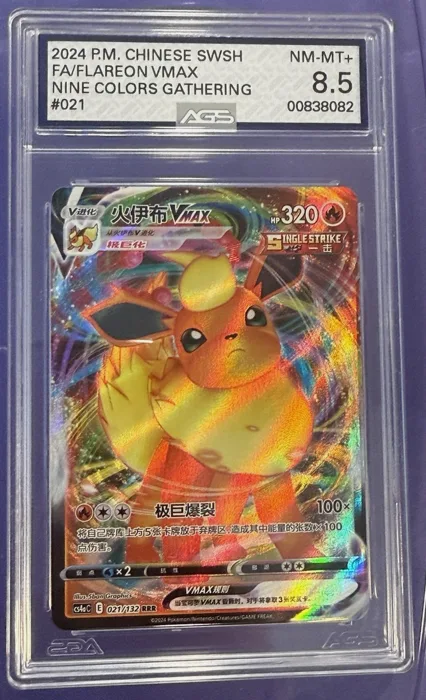
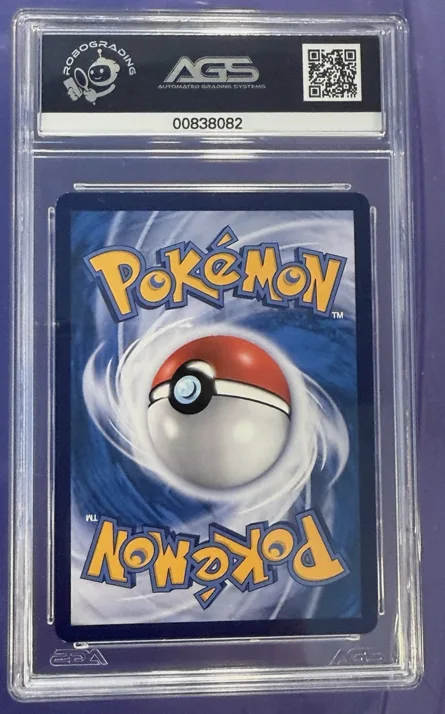
A purple-tinted machine-sealed holder, visually distinctive on a shelf but conventional in construction.
Example slab shown for reference — not a card I personally own.
The Label
SubgradesEight, online only
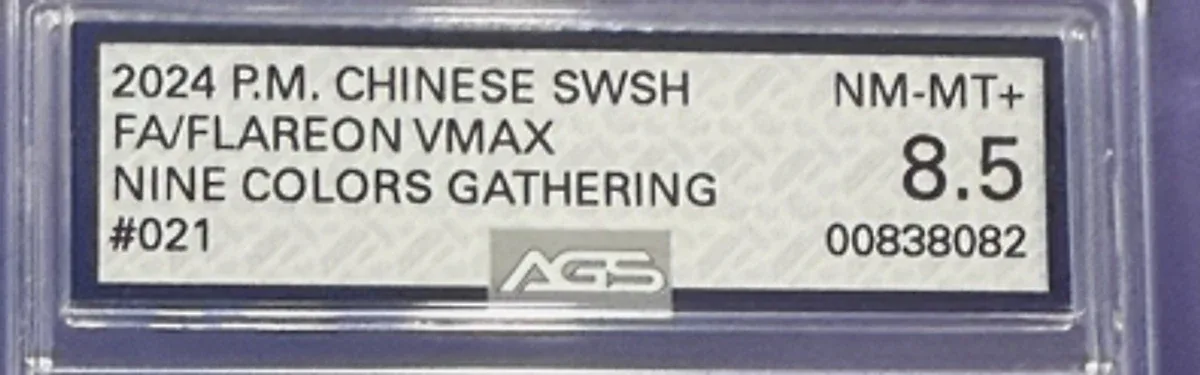
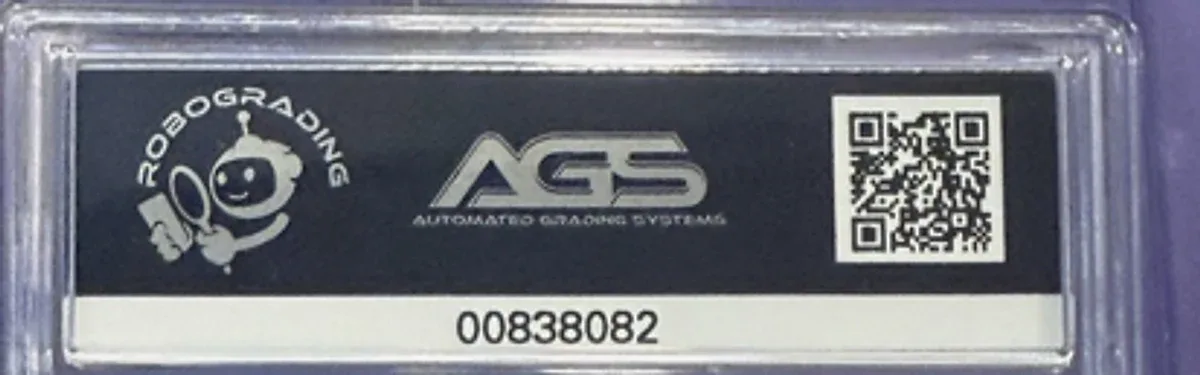
The front carries only the grade and cert number; the QR sits on the back beside the robot mark. The eight subgrades, four per side, live in the online scan report rather than in print — so the label alone tells you less than the report behind it.
Grader Use Cases
- Personal Collection
- Protection & Preservation
- Authentication
- Condition Documentation
- Insurance
Documentation and pre-screening. An AGS read is a cheap, repeatable measurement of a card's condition before you commit to a major grader's fee.
Known Concerns
The automation invites comparison with TAG, but AGS has not built comparable credibility, and hobby sentiment frames it as a pre-screening step rather than a certifier. A slab collectors treat as provisional does not hold resale value. Bulk minimums also mean a small submission carries a 20% per-card penalty.
On The Wire
What the hobby is saying about AGS / Robograding (Automated Grading Systems), with our read on what it changes for you.
AGS passed Beckett on TCG volume with a fully automated grade
Cardboard Journal's TakeThe TCG volume is real; check your buyer accepts a machine grade before you commit.
Wikipedia2026-08-30
History
Automated Grading Systems began in 2021, also operating under the Robograding brand, built on a proposition similar to TAG's: remove human subjectivity by grading with cameras and automation rather than eyes.
The technology story drew attention, but market reception has been more mixed than TAG's. Many collectors treat it as a way to pre-screen cards before submitting them to a major grader, rather than as a final certifier.