
Cardboard Journal's Take
PGI (Pristine Grading International)
A bulk specialist by design — its own rules cap it at cards worth under $100, which tells you what the slab is for.
What Sets Them Apart
Running since the 2002 National, and defined by what it refuses: cards must be post-1980 and worth under $100 raw, with no patch cards and a 25-card minimum. That restriction is the product — PGI has opted out of high-value grading rather than competing for it. Three or more graders review each card under magnification, and it covers niches the majors underserve, including magazine cards and foreign issues.
Tier
Our rating of how well the resale market actually recognises this grader.
Turnaround
Not published
Backlog
None published
What They Grade
- Sports Cards
Marketplace Acceptance
eBay
PGI does not appear on eBay's professional grader filter list and is not covered by the Authenticity Guarantee, so its slabs receive neither grader searchability nor eBay buyer protection.
Auction houses
Not accepted as standard inventory at Goldin, Heritage or PWCC — and largely irrelevant to them, since PGI caps submissions at $100 declared value.
Card shops and general resale
Minimal presence, consistent with a bulk-only operation.
Acceptance is close to moot here. PGI's own rules exclude the cards where grading changes resale value, so the question of whether the market recognises its slabs rarely arises.
Pricing
A single flat rate of $12.50, with the restriction as the actual product. PGI only accepts post-1980 cards worth under $100 raw, so it has deliberately opted out of high-value grading rather than competing for it. A 25-card minimum sets a $312 floor. Cards returned ungraded still cost 50 cents each. Read the grading standards before submitting — the acceptance rules are narrower than most.
The Slab
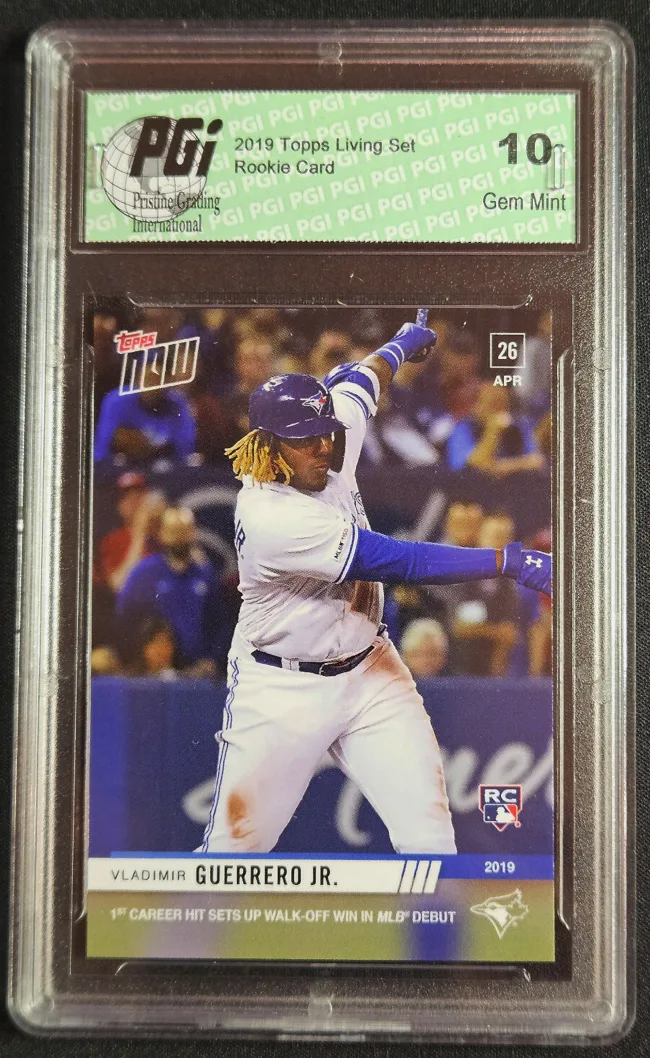
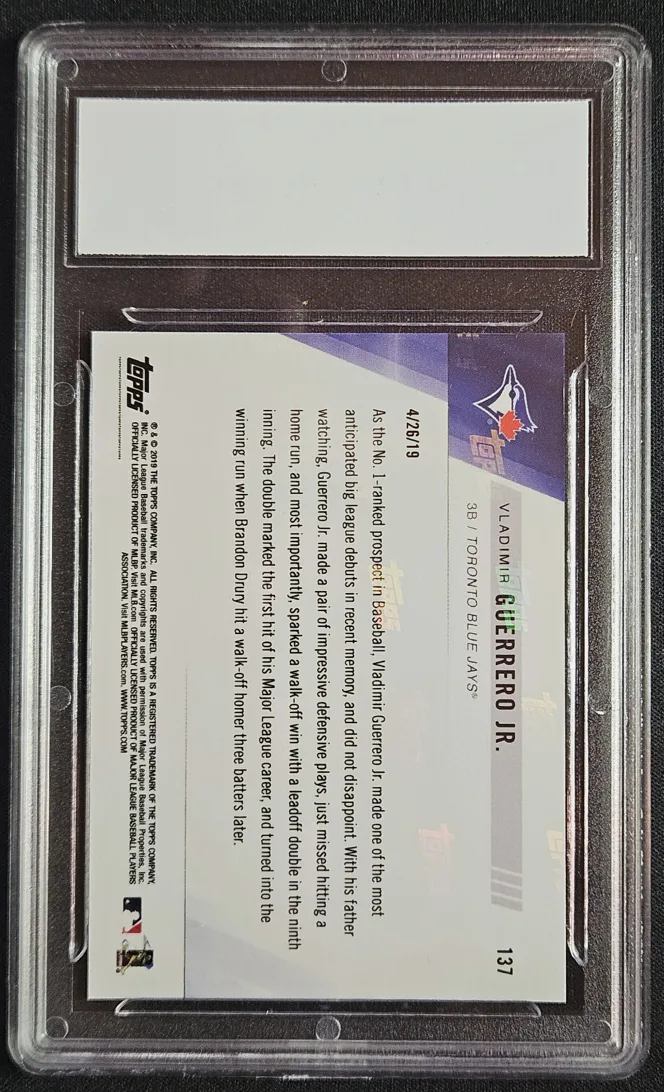
A conventional clear holder with a dark inner surround.
Example slab shown for reference — not a card I personally own.
The Label
SubgradesNone
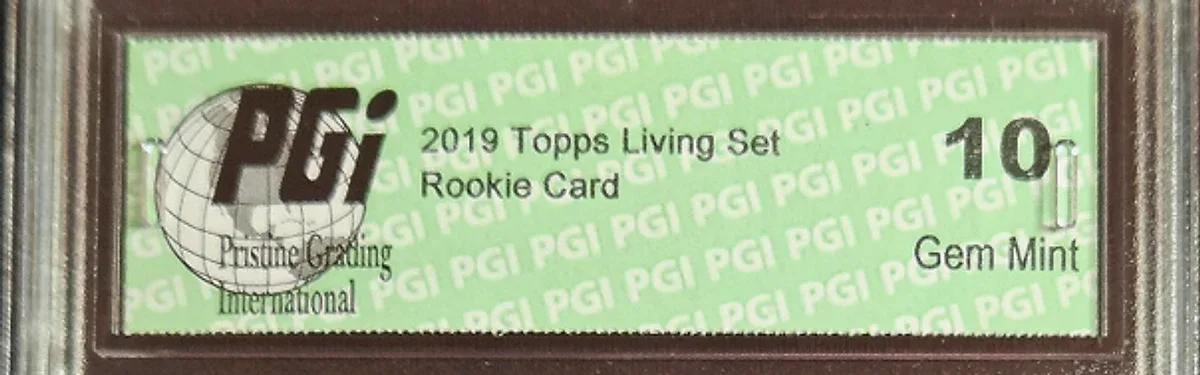
A green label tiled edge to edge with repeating PGI text as a watermark, carrying the card details and grade — but no cert number printed on the front, so there is nothing on the label to verify against anything.
Grader Use Cases
- Personal Collection
- Protection & Preservation
Bulk protection and personal collections for modern low-value cards, which is the whole of what PGI offers. $12.50 a card, 25-card minimum.
Known Concerns
The eligibility cap means the company does not compete for cards where grading affects resale meaningfully — that is a deliberate position rather than a failing, but it defines the ceiling. Hobby visibility is correspondingly low and independent coverage scarce. Cards returned ungraded still cost 50 cents each.
On The Wire
What the hobby is saying about PGI (Pristine Grading International), with our read on what it changes for you.
PGI deliberately grades the cards the majors don't want
Cardboard Journal's TakeThe only sensible fit is sub-$100 post-1980 cards and the foreign issues the majors ignore.
pgigrading.com2026-08-30
History
Pristine Grading International has operated since 2002, but has deliberately narrowed rather than broadened its market.
Its submission rules exclude most of what collectors grade: cards must be from 1980 or later, valued at no more than $100, cannot be patch cards, and must arrive in batches of at least twenty-five.
The effect is a bulk, low-value specialist rather than a general-purpose grader — a positioning choice that also limits how visible the company is in the wider hobby.