
Cardboard Journal's Take
TAG (Technical Authentication & Grading)
The most transparent grade you can buy — every point deduction itemised — but the market still pays for PSA's label, not TAG's evidence.

What Sets Them Apart
The most evidenced grade in the hobby. Cameras and AI score every card on a 1-1000 scale with each point deduction itemised, delivered as a QR-linked digital report — no other grader shows its working like this. Independent of Collectors Holdings. Submission volume grew more than 800% between January 2025 and April 2026.
Tier
Our rating of how well the resale market actually recognises this grader.
Turnaround
25 days
limited drops only; 25 business days when open
Backlog
101% of capacity (as of 26 Aug 2026)
Live tracker →What They Grade
- Sports Cards
- TCG
Marketplace Acceptance
Certificate lookup:Available
eBay
Listed in eBay's professional grader filter, so buyers can search for TAG slabs — but TAG is not among the four graders covered by eBay's Authenticity Guarantee. A TAG-graded card sold above $200 receives no eBay authentication or buyer protection.
Auction houses
Not standard inventory at Goldin, Heritage or PWCC, which key their catalogues to the four majors.
Card shops and general resale
Recognised by collectors who follow grading technology, but buyers search PSA and BGS populations when checking comparables, not TAG's.
The gap is recognition rather than rigour: TAG's grades are arguably the most evidenced in the hobby, but evidence is not what the resale market prices.
Pricing
Regular tiers are still paused while TAG works through its backlog, so there is no standing price list. Access comes through limited submission drops instead: the first opened on 27 August 2026 offering TAG Score at $79 per card at an estimated 25 business days, including 360-degree video, premium imaging on the digital report, and insurance up to $1,500 per card. Entry is managed by a randomised queue and availability is described as extremely limited. TAG says further drops will open as capacity allows.
The Slab

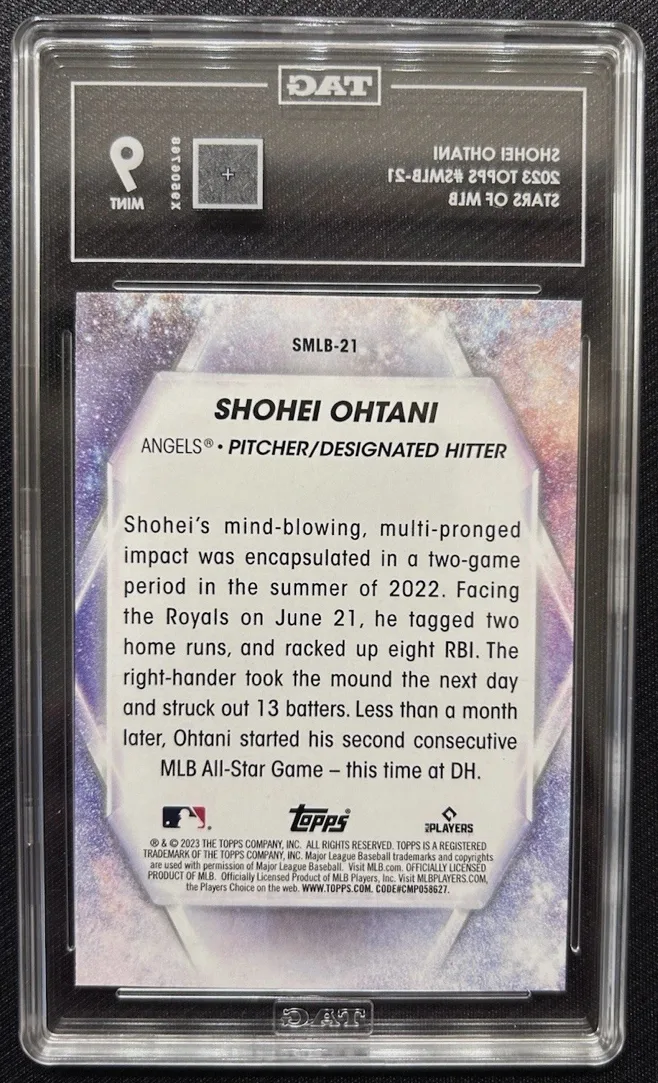
An unremarkable clear holder, and deliberately so — TAG's argument lives in the data attached to the slab rather than in the plastic around it.
Example slab shown for reference — not a card I personally own.
The Label
SubgradesFour, online only
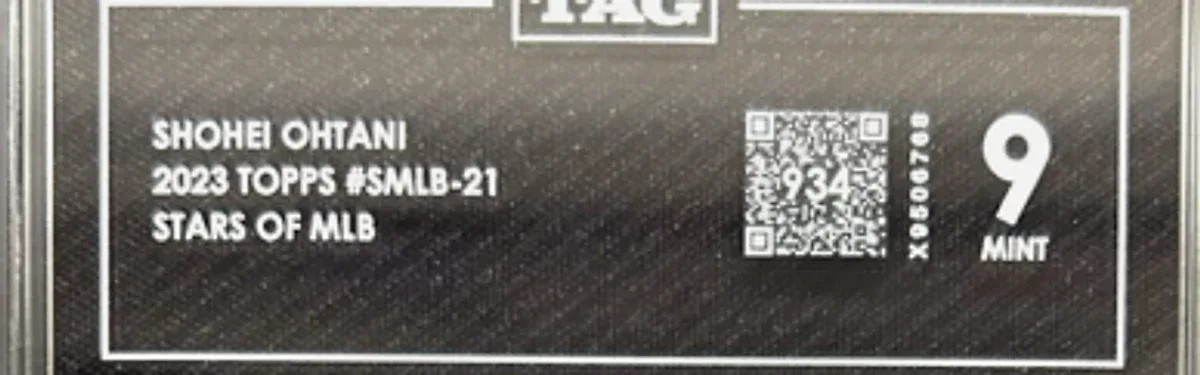
The black label puts a QR code beside the grade, and scanning it returns the DIG report: high-resolution defect maps, per-attribute scores and population. It is the only label here that treats itself as an index to evidence rather than a verdict.
Grader Use Cases
- Personal Collection
- Authentication
- Condition Documentation
- Insurance
Condition documentation, where nothing else comes close. The reopened tier carries insurance to $1,500 per card. Note regular tiers are paused and availability is limited.
Known Concerns
Capacity is the immediate constraint, though it is easing: TAG's own tracker put the active backlog at about 101% of monthly processing capacity as of 26 August 2026, down from a peak of 420% and from 134% earlier in the month, with full catch-up estimated for the end of September. Regular tiers remain closed in the meantime, and access runs through randomised limited drops. Recognition is the longer-term concern — the open question is whether objective grading converts into market share, or stays a preference among collectors who value the data more than the liquidity.
On The Wire
What the hobby is saying about TAG (Technical Authentication & Grading), with our read on what it changes for you.
TAG pauses its regular tiers after submissions grow more than 800%
Cardboard Journal's TakeDo not plan a TAG submission this quarter; confirm reopening before you ship.
taggrading.com2026-08-30
History
TAG was built on a different premise: that grading should be measured rather than judged. It began grading cards in 2022, using patented computer-vision imaging developed over the preceding years by founder Steve Kass, rather than relying on a grader's eye.
The output reflects that. Every card is scored on a 1,000-point scale, then translated to the familiar 1–10 with half points so the market can read it. Submitters get an itemised digital report showing exactly where points were lost, reachable from the slab itself.
Service tiers split by how much of that a submitter wants: verification only, a standard 1–10 grade, or the full 1,000-point score and ranking.