
Cardboard Journal's Take
DSG (Diamond Service Grading)
A young grader punching well above its weight on documentation — a 32-subgrade report at one flat price — but the resale market hasn't caught up to it yet.

What Sets Them Apart
A 32-subgrade report — every corner, edge and surface zone scored separately, with HD imaging of both faces reachable by QR from the holder. More granular than anything the majors publish. Pricing is one flat fee with no declared-value tiers at all, so a $5 card and a $5,000 card cost the same. Founded 2021.
Tier
Our rating of how well the resale market actually recognises this grader.
Turnaround
10 days
1–3 days on paid tiers
Backlog
None published
What They Grade
- Sports Cards
- TCG
- Autographs
- Specialty Formats
Marketplace Acceptance
Certificate lookup:Verify a cert →
eBay
Listed in eBay's professional grader filter, so DSG slabs are searchable, but DSG is not covered by the Authenticity Guarantee and carries no eBay buyer protection.
Auction houses
Not standard inventory at Goldin, Heritage or PWCC.
Card shops and general resale
Little presence in current hobby discussion, consistent with a grader founded in 2021, though DSG publishes a live searchable population report and QR-verified grade reports — more transparency infrastructure than most graders its size offer.
The infrastructure is ahead of the recognition. DSG has built the tooling buyers would need to price its slabs, but not yet the market awareness that would make them bother.
Pricing
One flat price per card with no declared-value tiers at all — a $5 card and a $5,000 card pay the same. Standard is $15 at ten business days, dropping to $12 per card above 100. Express is $35 at three days and Expedited $50 at one. Vintage, oversized and authentication-only services are all $15, and reslabbing is $10. Every tier includes the 32-subgrade report.
The Slab
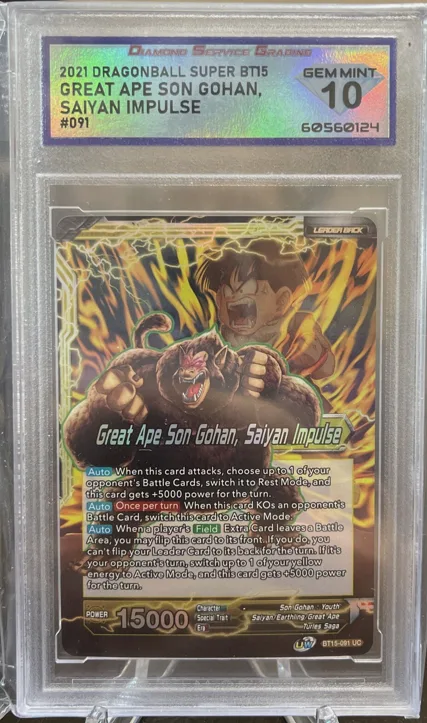
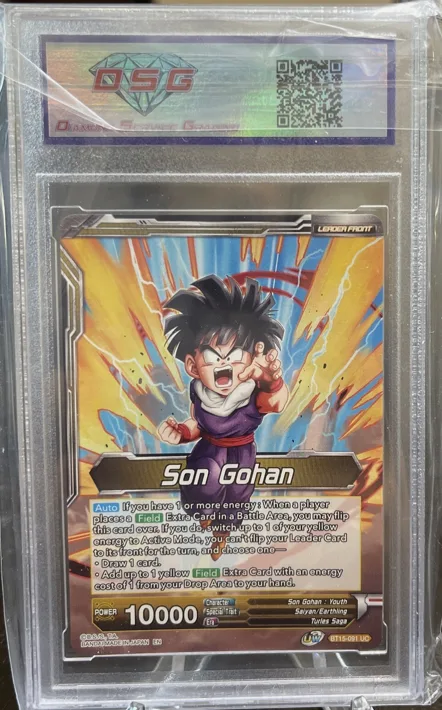
A conventional clear holder with a dark inner mat.
Example slab shown for reference — not a card I personally own.
The Label
SubgradesNone
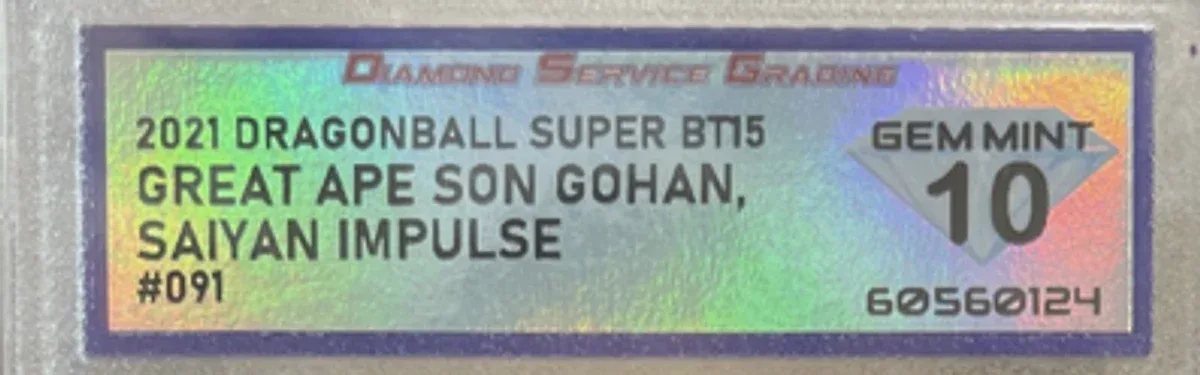
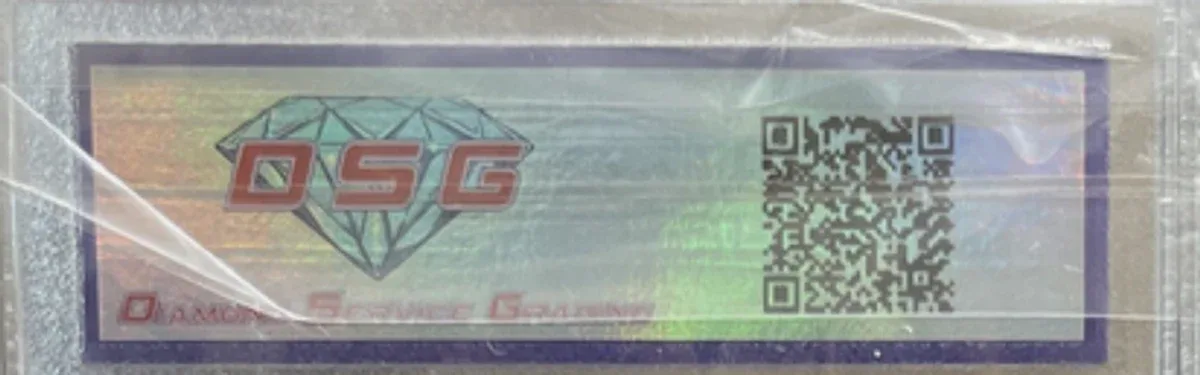
An iridescent header strip above the card details and a cert number, backed by a public card search. The foil treatment is the only real point of difference, and it is a cosmetic one.
Grader Use Cases
- Personal Collection
- Protection & Preservation
- Authentication
- Condition Documentation
Documentation, protection, personal collections and authentication. The report is the reason to choose it, and the flat fee makes high-value cards unusually cheap to grade.
Known Concerns
Recognition, not infrastructure, is the limitation. There is no meaningful independent coverage of grading consistency, so its accuracy claims rest on its own published standards. It does not currently authenticate aftermarket autographs, which must be certified by JSA first. The open question is whether a four-year-old label will ever carry weight with buyers.
On The Wire
What the hobby is saying about DSG (Diamond Service Grading), with our read on what it changes for you.
DSG's pitch: one flat price and 32 subgrades, whatever the card is worth
Cardboard Journal's TakeFlat pricing is the whole argument — it only pays on cards the majors would surcharge.
dsggrading.com2026-08-30
History
Diamond Service Grading was founded in 2021 by a group of collectors who wanted more transparency than the established graders offered.
Its model is unusually simple for the category: one flat price per card regardless of declared value, so a five-dollar card and a five-thousand-dollar card cost the same to grade. That removes the declared-value tiering every major grader uses, and with it the incentive to inflate what a card is worth at submission.
The technical offer is more ambitious than the price suggests. Every card returns a 32-point subgrade report covering centering, corners, edges and surface across eight zones, with HD imaging of both faces and a QR code on the holder that pulls up the full report. The slab itself is marketed as shatterproof.
As a 2021 entrant it has no long resale track record, and that remains the constraint.