
Cardboard Journal's Take
PSA (Professional Sports Authenticator)
Still the label buyers trust — but PSA is coasting on that trust while backlogs grow and lawsuits pile up.
What Sets Them Apart
The default. Roughly 70-75% of the sports-card market, and a PSA 10 is the number buyers search for when they check what a card is worth. Its free Set Registry runs to about 150,000 sets and is the reason serious set builders grade here at all. No subgrades and no half-point scale — the grade is a single number, and that simplicity is part of why it is liquid.
Tier
Our rating of how well the resale market actually recognises this grader.
Turnaround
70–80 days
Standard, the cheapest tier open today (Priority is next at 70–80 days)
Backlog
9.9 Million Estimated
cards currently waiting to be graded
Live tracker →What They Grade
- Sports Cards
- TCG
- Non-Sports & Entertainment
- Autographs
- Specialty Formats
- Comics
- Tickets
- Unopened Packs
- Magazines
- Balls
Marketplace Acceptance
Certificate lookup:Verify a cert →
eBay
PSA is the platform's sole authenticator for its Authenticity Guarantee programme, covering both raw and graded trading cards, and eBay requires graded cards selling above $2,000 to be verified by PSA — including slabs graded by its competitors. No other grader holds a comparable platform-level position.
Auction houses
Accepted without qualification at Goldin, Heritage and PWCC, where PSA-graded lots are standard inventory rather than an exception a consignor has to explain.
Card shops and general resale
A PSA cert number is the default lookup buyers use to check comparable sales, and PSA population figures are the reference most price guides key against.
In practical terms there is no venue in the trading-card market where a PSA slab is a liability. The constraints on PSA are cost, turnaround and backlog — never whether the market will take it.
Pricing
PSA prices by declared value, not simply by speed — what the card is worth decides which tiers you may use at all. All four Value tiers have been paused since June 2026. Since 14 September a new Standard tier is open at $59.99 per card for cards declared up to $1,000, quoted at 90 to 100 business days and processed only after existing Value and Bulk orders. Before that the entry point was Priority — the tier renamed from Regular on 9 September — which remains open at $79.99 up to $1,500 declared value and 70 to 80 business days. Express was repriced the same day from $149 to $199, which PSA says protects its 20 to 30 day estimate. Walk-Through is now called Premier at $599.
The Slab
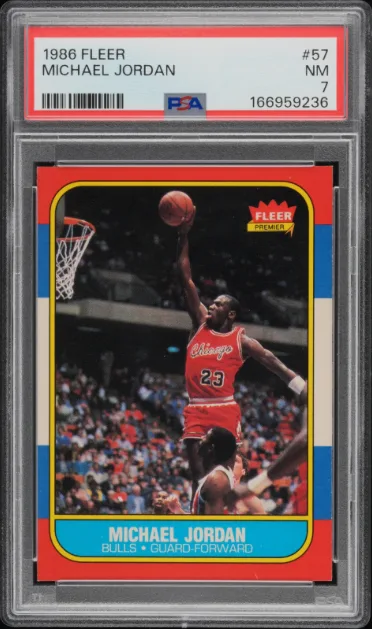
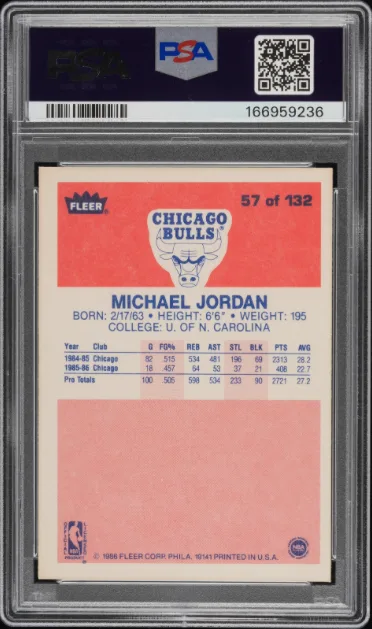
A sonic-welded holder in the size the whole hobby is built around — every one-touch, bin and shelf insert assumes these dimensions. The frosted inner border hides a sliver of the card's edge, and that same frosting appears around the outer rim once a slab has been cracked and resealed.
Example slab shown for reference — not a card I personally own.
The Label
SubgradesNone
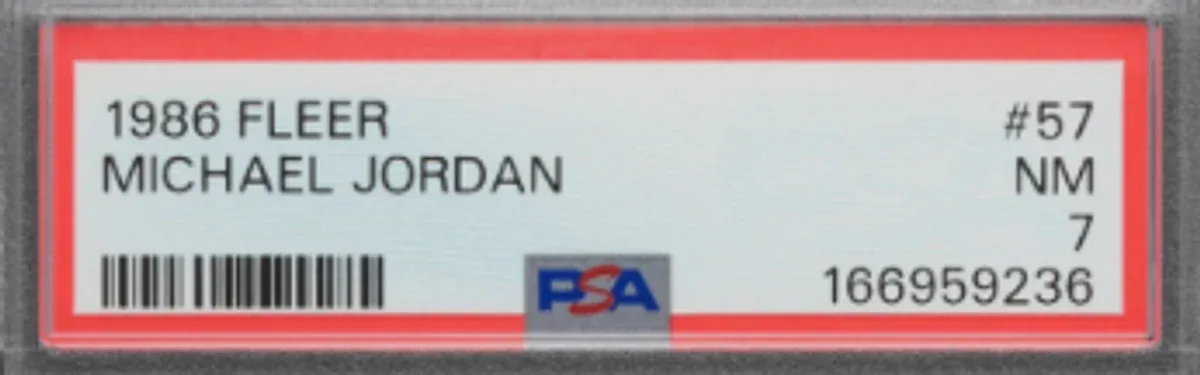
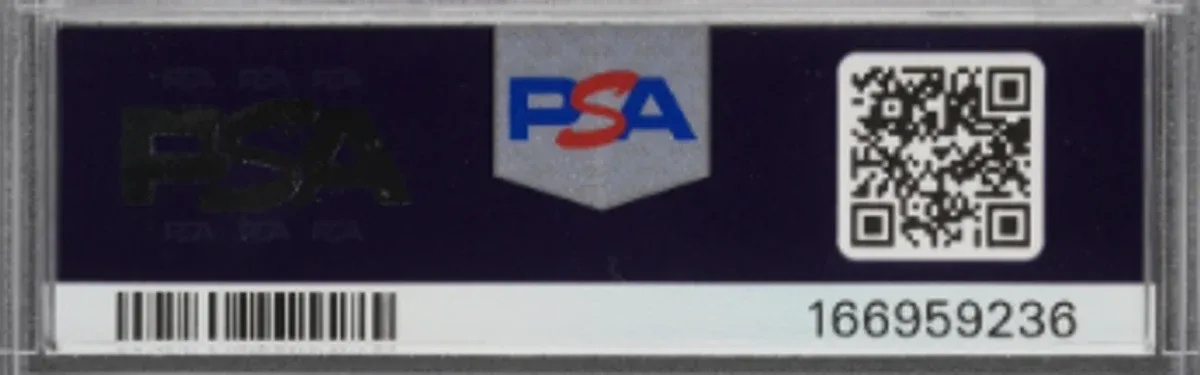
The white flip with the blue Lighthouse mark is the most recognised object in the hobby, and most of what a PSA card sells for is attached to the label rather than to the grade behind it. Barcode and cert number on the front, QR code on the back.
Grader Use Cases
- Resale Value
- Long-Term Investment
- Personal Collection
- Authentication
- Trading & Liquidity
- Set Completion
Anywhere the eventual sale matters. Carries eBay's Authenticity Guarantee and is the venue standard at Goldin, Heritage and PWCC. The wrong tool for a card you simply want housed — price and backlog make that expensive.
Known Concerns
The cheapest tiers have been paused twice under heavy backlogs, most recently in June 2026 with roughly ten million cards queued. A new $59.99 Standard tier opened 14 September 2026, but PSA is explicit that it does not replace the Value tiers, which remain paused with no date attached, and that Standard orders are processed behind existing Value and Bulk work — PSA has said Value tiers will not reopen until the backlog falls under five million cards, from 9.9 million as of 9 September 2026. A wave of 2026 lawsuits, including a federal RICO claim and a proposed class action, alleges inconsistent grading and grade inflation on cards PSA had repurchased; unproven, but they fuelled a visible boycott. Parent Collectors Holdings now owns PSA, SGC and Beckett, drawing a congressional FTC referral and an antitrust suit seeking divestiture — Rasmussen v. Collectors Holdings had motions to dismiss and compel arbitration heard 11 September 2026, with no ruling public as of this update.
On The Wire
What the hobby is saying about PSA (Professional Sports Authenticator), with our read on what it changes for you.
PSA and Collectors now face three lawsuits, two of them alleging fraud
Cardboard Journal's TakeCollectors' PSA/SGC/Beckett rollup is now defending three separate suits, none decided.
Value Added Resource2026-09-14
PSA opens a $59.99 tier on 14 September, and it is not Value coming back
Cardboard Journal's TakeThe cheap route back in is $59.99 and it queues behind everything already in the building.
psacard.com2026-09-09
Showing 2 of 5 about PSA.
History
Founded in July 1991 by David Hall, who had already built Professional Coin Grading Service, PSA brought standardized third-party grading to a sports card market then awash in counterfeits and subjective condition claims. That head start compounded: decades of graded cards built the hobby's deepest population database, and a PSA 10 became the number buyers search for — which is why a PSA slab carries resale weight a newer label simply doesn't.
Ownership has changed since. Parent company Collectors Universe went private in February 2021, bought at $92 a share by an investor group led by Nat Turner alongside D1 Capital Partners and Steve Cohen's Cohen Private Ventures. Now operating as Collectors Holdings, it acquired SGC in 2024 and Beckett in late 2025 — consolidating most of the grading industry under a single owner and prompting a December 2025 congressional call for an FTC antitrust investigation.
Scale has always been the weak point: PSA first suspended its entry-level tiers back in 2021, so the current pause is a repeat of a pattern, not a one-off.